Ask someone in town where they're headed and you'll hear both words used the same afternoon: "Going down to Negra for a surf," then an hour later, "Grabbing lunch in Pargos." Most visitors assume these are the same place with two nicknames. They're not entirely wrong, but they're missing the more useful fact: Playa Negra is the beach, Los Pargos is the village a few hundred meters back from it, and the two halves of this community do genuinely different work. One is built around a reef break that doesn't forgive casual mistakes. The other is built around a restaurant scene, a community center, and an art gallery that most people never associate with a surf town this size.
Knowing which half handles which job is the difference between a smooth week here and a frustrating one.
Two Names, One Small Town
The name split isn't marketing. Los Pargos, which translates to "the snapper," is the actual town where Playa Negra sits, reached from Santa Cruz through 27 de Abril and then Paraíso. The beach itself carries its own name because it's the feature everyone came for, but the commercial center, the homes, and the civic infrastructure all belong to Los Pargos proper. Locals use the two names interchangeably in conversation, but on a map they're distinct, and that distinction shapes how the week actually runs.
The town has modernized in ways that don't show up in postcard photos. Culverts now run under the creek beds, bridges cross the rivers that used to flood the road, and fiber optic service reaches speeds up to 200 Mbit/s. Water used to mean an artesian well on every property. A public water system now reaches nearly every home and business in town. None of that changes the reef out front, which still runs on its own rules regardless of what's happening on land.
What the Beach Is Actually For
Playa Negra's reef break is the reason the town exists as a destination at all, and it earned its reputation honestly. The wave breaks on nearly every tide, picks up swell from almost any direction, and holds size longer than most breaks nearby, which is why local surfers call it the area's swell magnet. It's also why the beach shows up in surf guides as a spot for intermediate and advanced riders rather than a learn-to-surf destination. The takeoff zone sits over a shallow reef that turns unforgiving fast, particularly at low tide when rocks and urchins are exposed. The better strategy, and the one locals actually follow, is to surf it on a mid-to-high incoming tide and to watch a set or two before paddling out if you don't already know the wave.
If you're newer to surfing and want the same coastline without the same consequences, the honest local answer is to drive up to neighboring Playa Avellanas instead, which offers gentler beach breaks better suited to learning.
Where You Actually Swim
This is the part generic guides skip, and it's the detail that matters most if you live here rather than just visiting for a week. Playa Negra is a reef beach, not a swimming beach. The bottom composition and the wave energy that make it a great surf spot make it a poor choice for a casual dip with kids or for anyone who just wants to float around. For that, the local move is to head a few kilometers south to Playa Lagartillo, a sheltered stretch that's calm and swimmable, especially at low tide.
It's a small geographic fact, but it's the kind of thing that only becomes obvious after you've tried to wade into Negra expecting a normal beach day and found rocks and a shore break instead.
What the Town Is Actually For
Back in Los Pargos, the food scene is disproportionately good for a town this size, and each place has settled into its own lane rather than competing for the same customer.
| Where | What It's Actually For |
|---|---|
| Villa Deevena | French fine dining from Chef Patrick Jamon, with six boutique rooms on site |
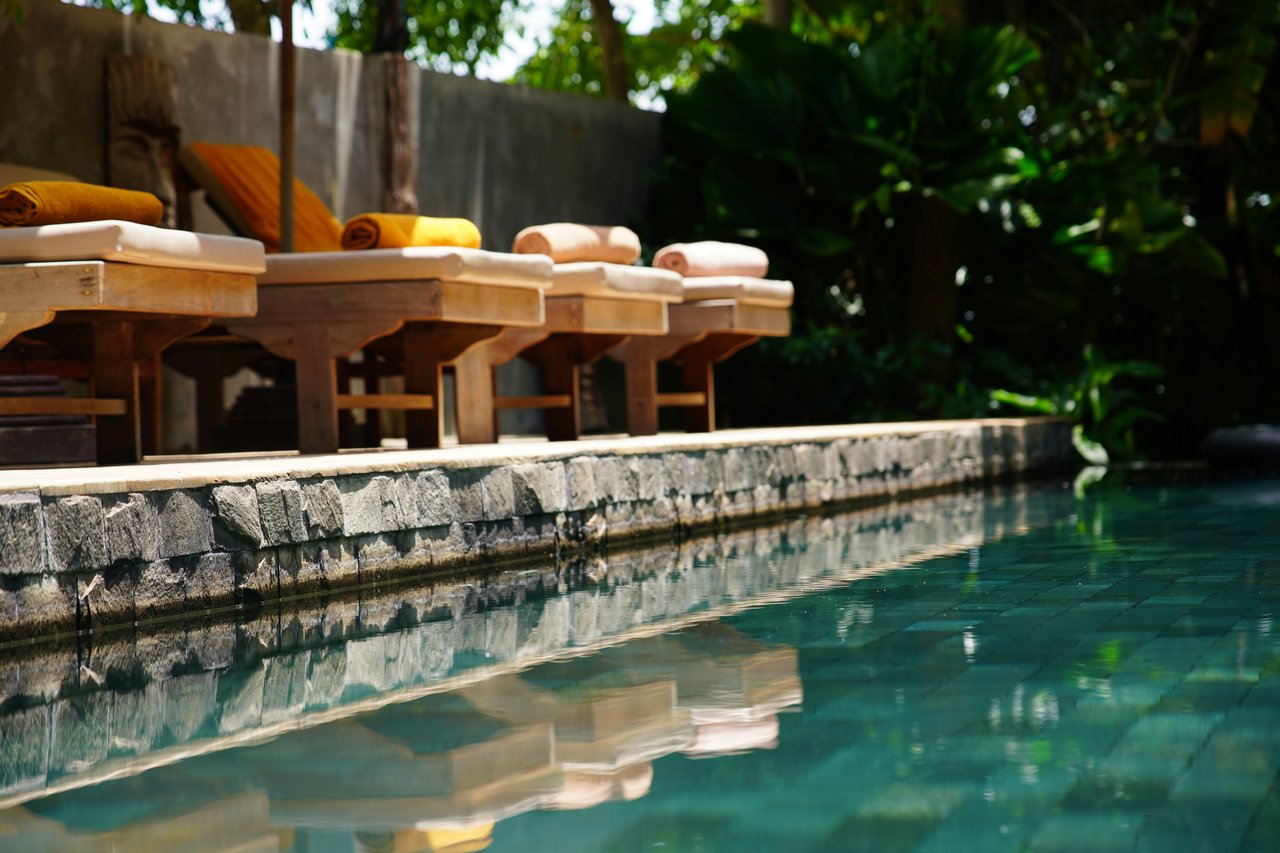
| Cafe Playa Negra | Peruvian ceviche, attached to a boutique hotel with a pool and garden |
| Jalapeño Taco Grill | Mexican food, casual |
| La Vida Buena and Kon-Tiki | Pizza, two separate spots covering the same craving |
| Mycelium | Asian fusion |
| Cafe La Ventana | Organic menu, sitting next to Johnny Manana's Surf Art Gallery & Studio |
| Cafe Corazón | Coffee, breakfast, and lunch, doubling as a community gathering spot with live music |
| Hotel Playa Negra | Beachfront restaurant and bar under a palm-thatched rancho, right on the sand |
Cafe Corazón deserves a second mention because it's not just a coffee shop. It doubles as the Los Pargos Community Center, sponsoring local kids in music lessons, running traditional dance classes, and offering Chorotegan ceramics instruction, alongside periodic dental and medical clinics, first aid courses, and movie screenings. Live music has been part of the space from early on. It's the kind of institution that a surf-town guide written from a hotel room would never catch, because it has nothing to do with tourism and everything to do with who actually lives here.
For gear and guided time on the water, Pargos Adventures is the shop locals point you toward, running paddleboard tours, surf lessons, mountain bike outings, waterfall hikes, and snorkeling trips out of a base at each end of town. If you want to skip the reef break entirely for an afternoon, there's also a wooden boardwalk through the mangrove system just north of the beach, a quiet alternative to a surf session that most first-time visitors never find on their own.
The coastline itself has more texture than the single name suggests too. Locally, stretches of sand carry their own names, Callejones Port, Caramar Beach, and Callejones Beach among them, alongside Playa Negra proper. It's a reminder that "Playa Negra" the destination is really a string of connected spots, not one uniform strip of sand.
The Calendar That Runs the Two Halves
The split between beach and town gets more pronounced depending on the month. Dry season, running December through April, brings the most reliable version of the wave: consistent size, offshore winds through most of the day, and a version of the reef that's more approachable for anyone comfortable on a board. It's also the busiest stretch for the restaurants and the boutique stays, since it lines up with peak visitor season.
Green season starts in May and shifts the mechanics. Swells get bigger and carry more power, afternoon showers roll in, and mornings turn cloudier. For surfers who know the break, it's arguably the better window, since the reef holds more energy. For the town side, it's quieter. The wettest stretch, September and October, sees some smaller local businesses pause entirely, a reflection of lower tourism traffic and harder driving conditions rather than any real decline in what the town has to offer. It's less a shutdown than a seasonal breath, and it's worth knowing about if you're planning a visit or trying to time a project around who's actually open.
The Practical Takeaway
None of this is exotic information, but it's the kind of thing that only becomes obvious once you've lived here through a full year. Playa Negra and Los Pargos share a name in casual conversation because they share a community, an international mix of Costa Ricans and transplants from the Americas and Europe who've built a life around a wave and a village that both happen to be small. But the beach's job is surfing, on the tide it wants, respected for what it is. The town's job is everything else, the ceviche and the ceramics classes and the dental clinic and the pizza place you pick depending on which one has a table. Treat them as one undifferentiated blob and you'll misjudge both. Treat them as the two-part system they actually are, and the place makes a lot more sense.
If you're weighing what it actually looks like to spend real time in Los Pargos, whether that's a rental for a season or something longer term, the team at Gold Coast Realty has spent years learning which parts of this coastline work for which kind of life. Talk to a local expert before you assume the map tells you everything you need to know.