Most nights during the dry season, a small cluster of red-tinted flashlights moves slowly along the sand below Capitán Suizo, the point break that marks the southern edge of Playa Langosta. Anyone who has lived here more than a season learns to read that light for what it is. It is not a group of tourists lost on their way to the water taxi that crosses the estuary to Playa Grande. It is a guide and a small group, walking quietly, watching a leatherback dig.
Nearly every visitor-facing guide to turtle season in this stretch of Guanacaste sends people north. Cross the estuary, they say, and Playa Grande inside Las Baulas National Marine Park is where the leatherbacks come ashore. That is true, but it treats Langosta as the road to the good part rather than as part of it. The park's protected nesting beaches are three, not one: Ventanas, Langosta, and Playa Grande. Roughly half of the Eastern Pacific leatherback females that nest in the park choose one of these three stretches of sand, and one of them is the beach residents here already walk every evening.
That single fact changes how the next several months read for anyone living in the neighborhood, not just for anyone booking a tour.
The Park's Boundary Runs Through the Neighborhood
Las Baulas was declared a national park in 1990 and given firmer legal protection in 1995, and its history has local names attached to it that rarely make the tourist brochures. Guides at the old Hotel las Tortugas, under Louis Wilson and Marianel Pastor, were among the first to run nesting tours here, training former egg poachers to work as guides instead. Maria Koberg spent years bringing school groups and scout troops to the beach so a generation of local kids would grow up understanding what they were protecting. The park exists because people who lived here decided the turtles were worth more walking the beach at night than they were worth harvested.
What that means today is practical rather than sentimental. The protected zone is not a fence around Playa Grande. It follows the coastline south, through Ventanas, and onto the sand at Langosta. During nesting season, the same rules that apply on the beach across the estuary apply here: red light only, no flash photography, no walking above the high tide line, and a guide if you want to get close. A resident jogging the beach at dusk in December is sharing that sand with an active nest site, whether or not a tour group happens to be out that night.
Two Calendars, One Stretch of Sand
Leatherback season here runs roughly October through March, with the heaviest activity across November, December, and January. Hatchlings follow from January into March, so the same weeks that bring the biggest waves of the dry season also bring the highest concentration of nests in the sand people are walking on.
For a neighborhood that already runs on tide charts, that means two calendars overlapping instead of one:
- October to January, adult females come ashore at night to dig and lay. This is also when the dry season crowds start arriving and evening beach traffic picks up, which is part of why guided access matters more here than it would in the off season.
- January to March, hatchlings emerge and make their run to the water, usually in the very early hours or right around dawn, which overlaps with the same window a lot of residents already use for a pre-work surf check.
- April onward, the beach empties of both nests and tour groups, and Langosta goes back to being simply a quiet stretch of sand with a good point break.
None of this is roped off or signposted the way it might be at a more heavily managed park entrance. It is closer to an unwritten local calendar, and it is one more reason the rhythm of an evening walk on this beach looks different in December than it does in June.
The Rocks Are Why the Water Empties Out
Playa Langosta sits about a twenty minute walk south of downtown Tamarindo, separated by a small rocky point that does more work than it looks like it does. On the Tamarindo side of that point, the beach is a long, forgiving stretch of sand that made the town one of the easiest places in the country to learn to surf. On the Langosta side, the waves get bigger, the crowd thins out, and the rock formations get more dramatic. It is also, by most local accounts, not a great swimming beach. The same rocks and currents that make it a poor spot for a casual float make Capitán Suizo a real point break, one that turns offshore whenever the wind comes out of the south, even while every other spot up the beach in Tamarindo is stuck sideshore.
That combination, more current, more rock, less swimming, is part of why this stretch of sand has stayed quieter than the beach it borders. Fewer people means less light, less noise, and less foot traffic on the upper sand where nests get dug. The geography that makes Langosta a worse beach for a swim has, incidentally, made it a better one for a turtle.
The Beach Club Keeps Both Clocks
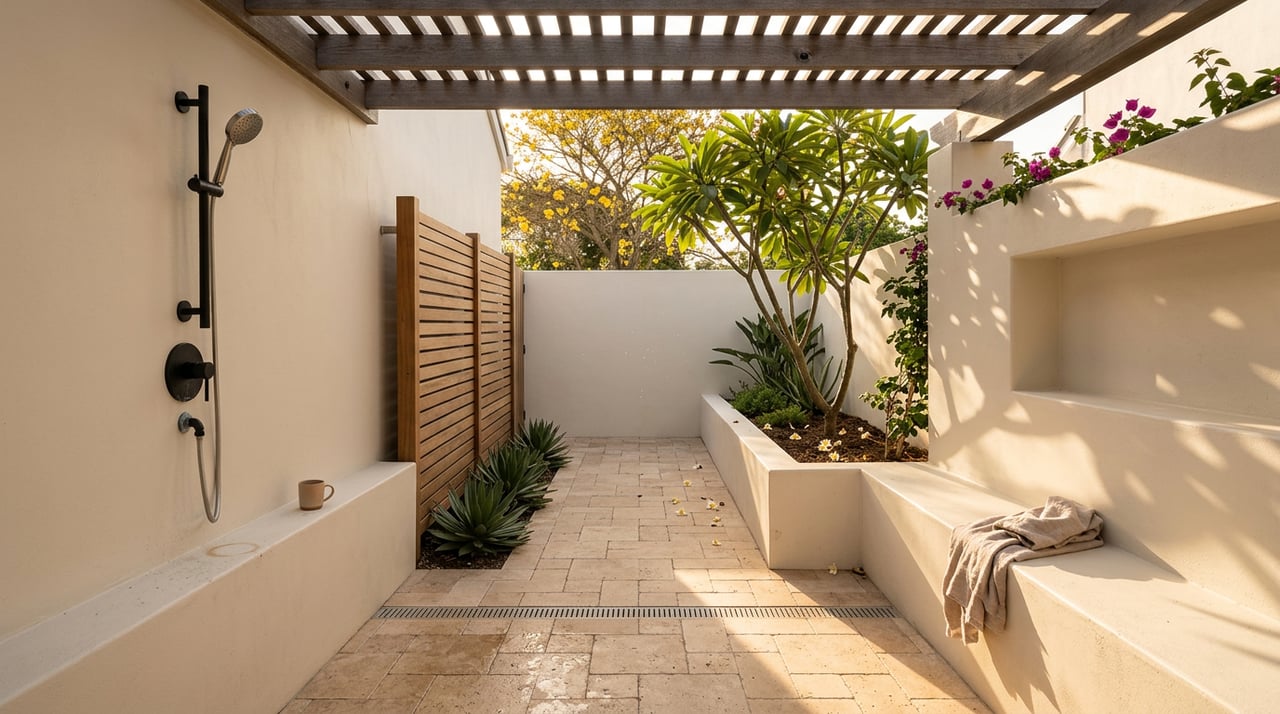
The Langosta Beach Club sits close enough to town that it is a fifteen minute walk or five minute drive from downtown Tamarindo, but far enough that it operates on its own schedule. Members who surf here tend to do it in one of two windows: early, before work, or right at sunset, treating the evening session as the day's last workout. The club's shower facilities exist specifically to make that transition from sand to dinner table quick enough that nobody has to go home first.
During nesting season, that sunset window runs right up against the start of the evening's turtle patrols. Guided walks typically gather around dusk and run two and a half to four hours, which means the same hour a member is rinsing off after a sunset surf is the hour a guide down the beach is briefing a small group before they start walking. It is not a conflict so much as a shared use of the same short stretch of coast, one crowd heading to a pool bar and another heading toward a nest site, both moving through the same light.
What This Actually Changes
None of this is a reason to avoid the beach or to treat the season as an inconvenience. It is a reason to understand why the neighborhood feels different from October through March than it does the rest of the year, and why that difference has nothing to do with tourism numbers and everything to do with what is happening in the sand itself. Playa Langosta gets described, accurately, as quieter and more residential than Tamarindo. Less discussed is that part of what keeps it quiet is baked into its role as nesting habitat, not just its zoning or its hotel inventory.
For anyone who already calls this stretch of coast home, that is the kind of detail that turns an evening walk into something worth paying attention to. The next time a small group with red flashlights passes on the sand below Capitán Suizo, they are not on their way to Playa Grande. They are exactly where they mean to be.
For more on how Guanacaste's coastal neighborhoods work day to day, or if you ever want a local's read on what a stretch of coast like this actually offers, Gold Coast Realty is a good place to start that conversation. Talk to a local expert.